
MISSIVE 42
The Four of Coins at the Dawn of 2021
In January, a group of unlikely allies trapped in suspended animation decided to play an ambitious game: could they destroy a hedge fund by collectively pooling their leisure money into buying shorted stocks? The answer would eventually be ‘no,’ generally speaking, but their several billion dollar assault did not go unnoticed.
The commentary that followed was nothing short of appalling; financial analysts actually argued that this was stimulus money being misused, as if those Americans who received a mere six-hundred dollars in pandemic relief were choosing to waste it on a gag. The reality, of course, is that those still able to work had a some amount of money fermenting in checking accounts that would normally be spent on pleasure. But it was the beginning of a controlled narrative of what would become a punitive saga.
In this regard, I’ve been thinking about the Metamyth Tarot’s unique take on the Four of Coins, positioning it as a dealer in a casino:
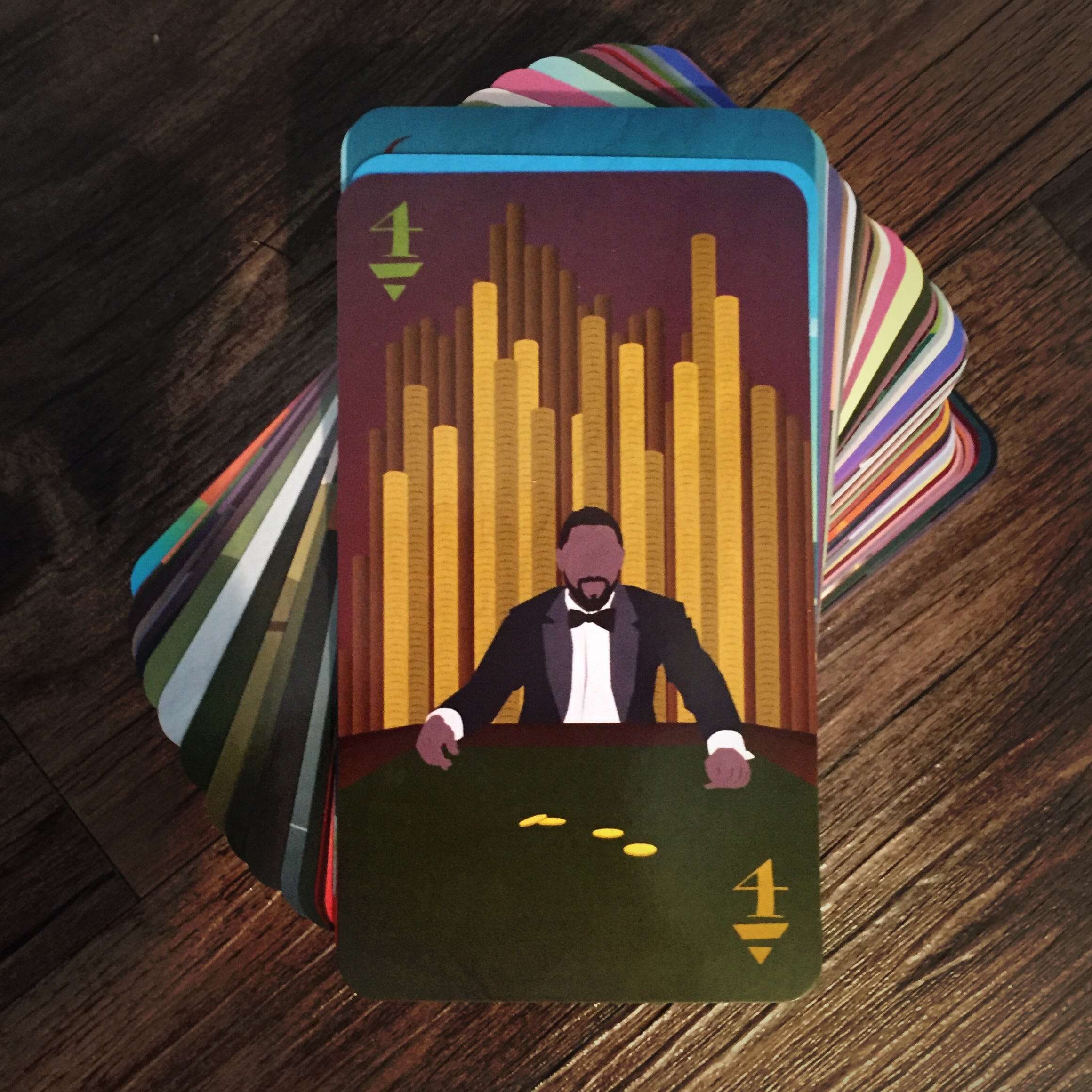
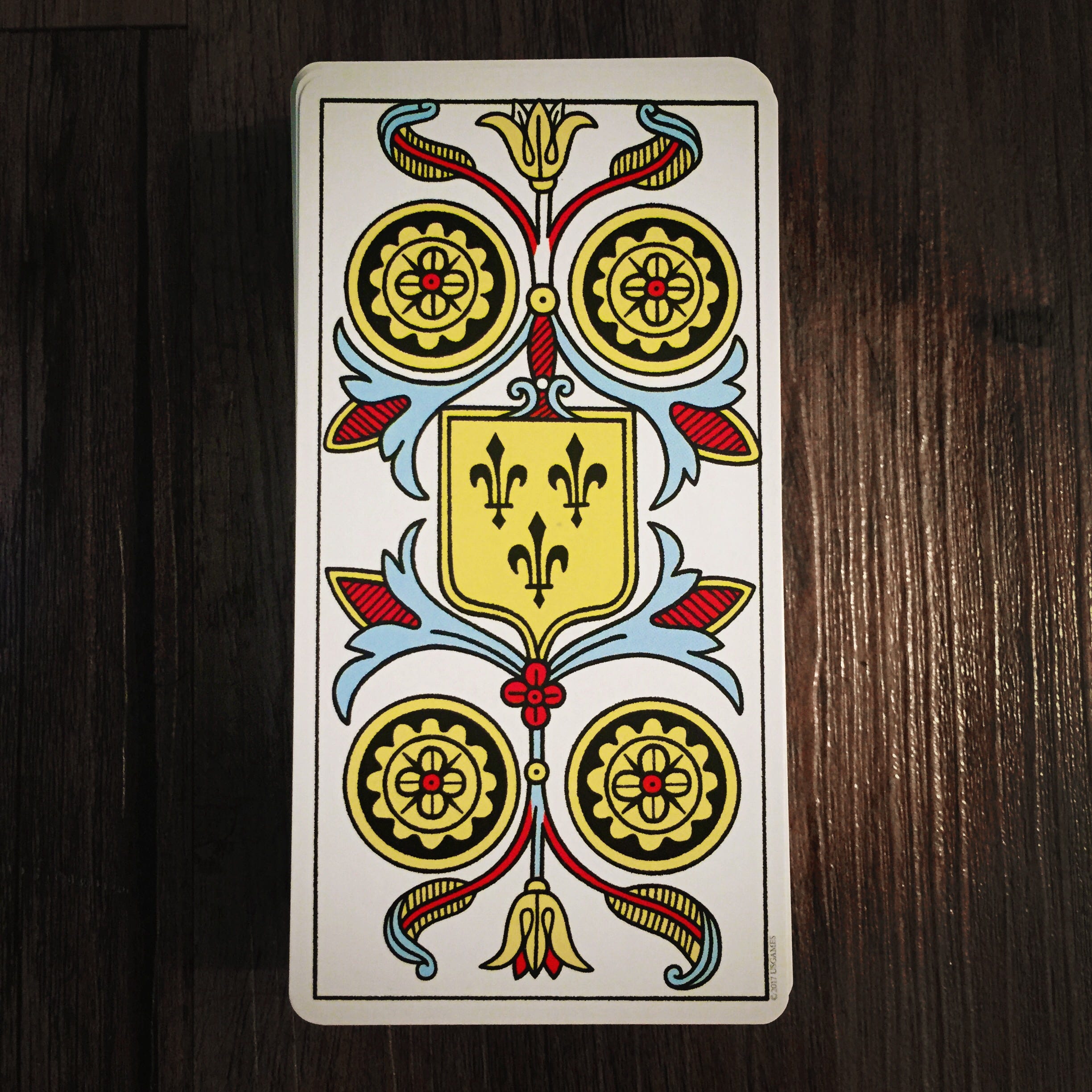
This is an obvious harkening to the old adage, “the house always wins.” This is a card associated with greed and hoarding, though it is more appropriately thought of as assured success, the sort of game where the outcome is decided in advance. Waite associated it with “The surety of possessions… legacy, inheritance.” T. Susan Chang noted in her 36 Secrets that this card is unique in the Marseilles deck, featuring a family’s heraldic shield, suggesting the wealth it indicates is dynastic and self-reinforcing:
In the Thoth tradition, the card becomes Power, and is represented as a fortress with only one entrance, reminiscent of old maps of Prester John’s Christianopolis:
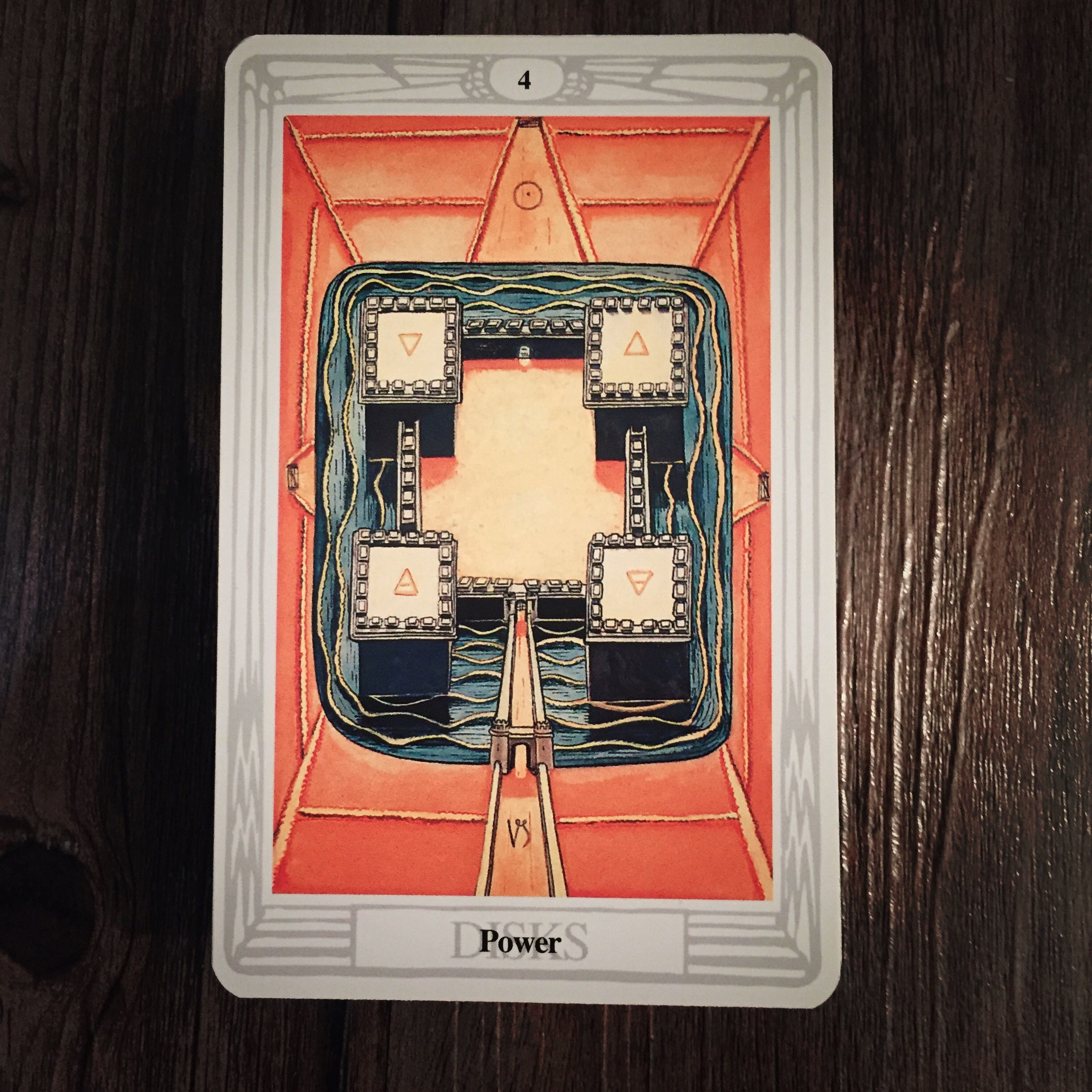
We are simultaneously viewing the castle from the front, as well as from above, due to the synthetic projective geometry techniques employed in Lady Frieda Harris’s art. This is associated with the third decan of Capricorn, January 10th through January 19th, the midwinter point when the sun reaches the end of its southern drift in the sky before reversing course. Established forces seem weakest during this period of time, when they are, in reality, at their most entrenched.
Just as a fortress only allows entrance via established chokepoints, so too does the casino control the conditions under which their guests win and lose. Even Blackjack, a modestly winnable game, has built-in mathematical advantages for the dealer. And probabilistic strategies that overcome this, such as card counting, will quickly earn whosoever employs them a lifetime ban from the establishment.
After several weeks of egregiously expensive siege warfare online, on January 28th, just days away from Melvin Capital’s short position coming due, nearly every single retail trading application suspended the ability to purchase all battleground stocks simultaneously. Sales were still permitted, however, resulting in an immediate plunge of value across the board. Some margin traders were even forcibly liquidated by the platforms themselves. The House did what it does best: changing the rules.
This event, of course, happened in the decan that follows the Five of Pentacles, that of the Five of Swords, or Lord of Defeat:
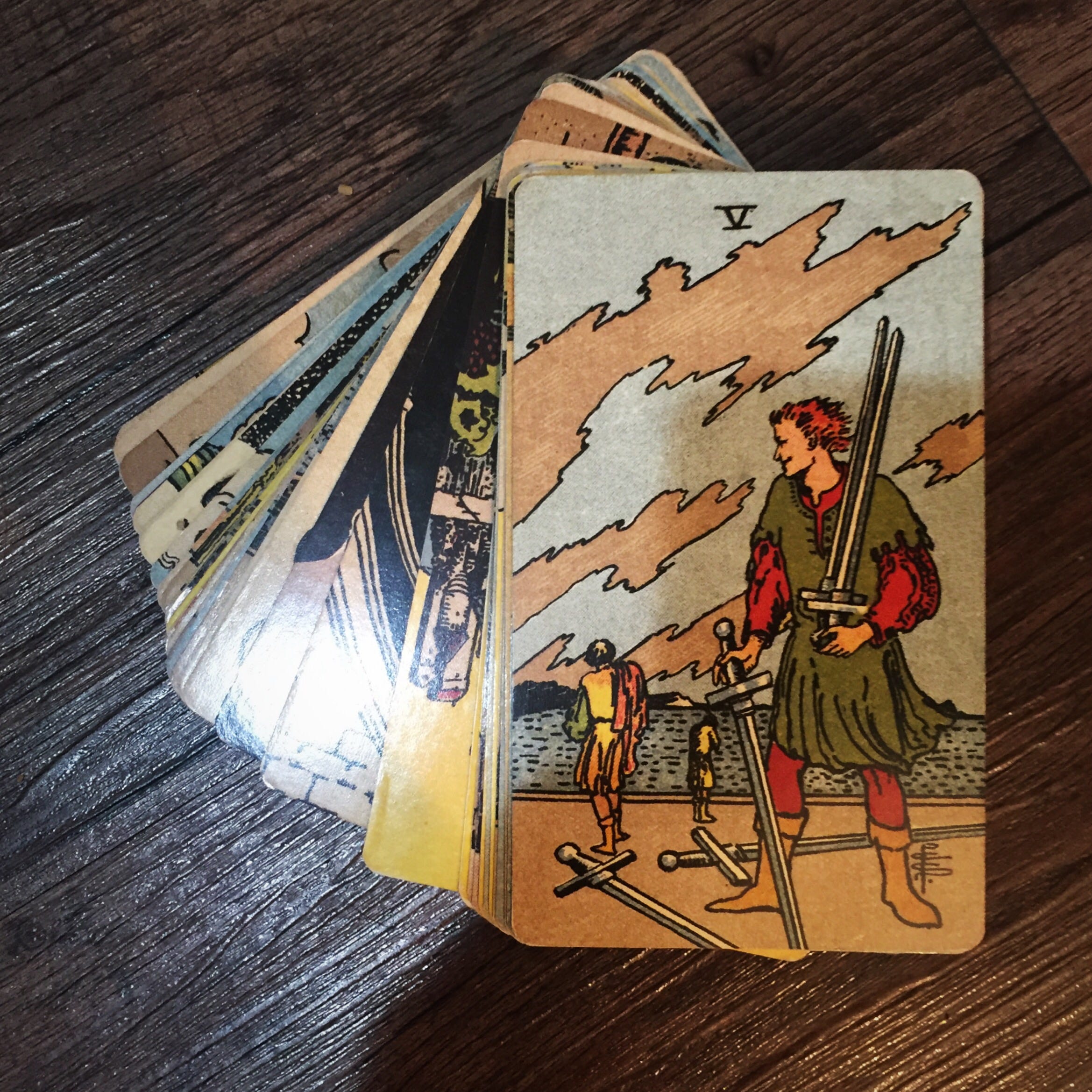
Once the short positions were successfully insulated, the hedge funds simply adapted, securing options on both sides of the volatility to ensure profit regardless of outcome. There was no longer a path forward. The house chose to win, as it is wont to do.
This is not to say that oppressive structures and forces cannot be overcome, because of course they can. It happens all the time. Towers fall. But care must be taken about the approach; the fortress only has one entrance for a reason.