
MISSIVE 28
The Devil, Quintessence, and the Aging of Spirits
Kentucky Route Zero’s intermission between Acts II and III is a short play titled “The Entertainment,” whose protagonist is a desperate bartender going out of business. His regulars have refused to pay their tabs for so long that he is forced to make a desperate move: he sells their unpaid tabs to the mysterious Hard Times Distillery to collect, who use debt itself in their bourbon’s aging process. Once all those who have abused the bartender’s generosity over the years are present, a Mephistophelean figure from Hard Times arrives, and the play ends in darkness as they are made company thralls:
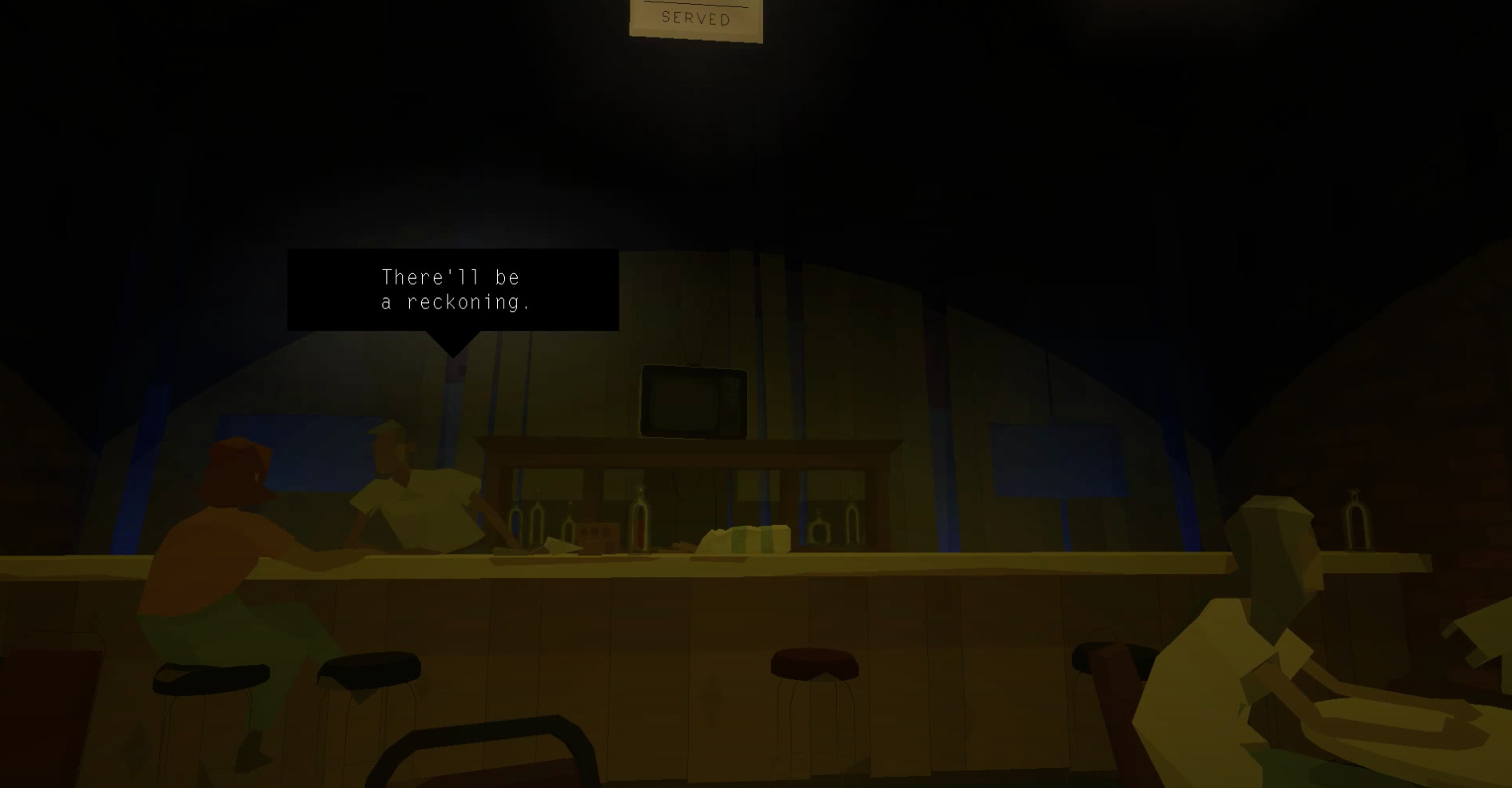
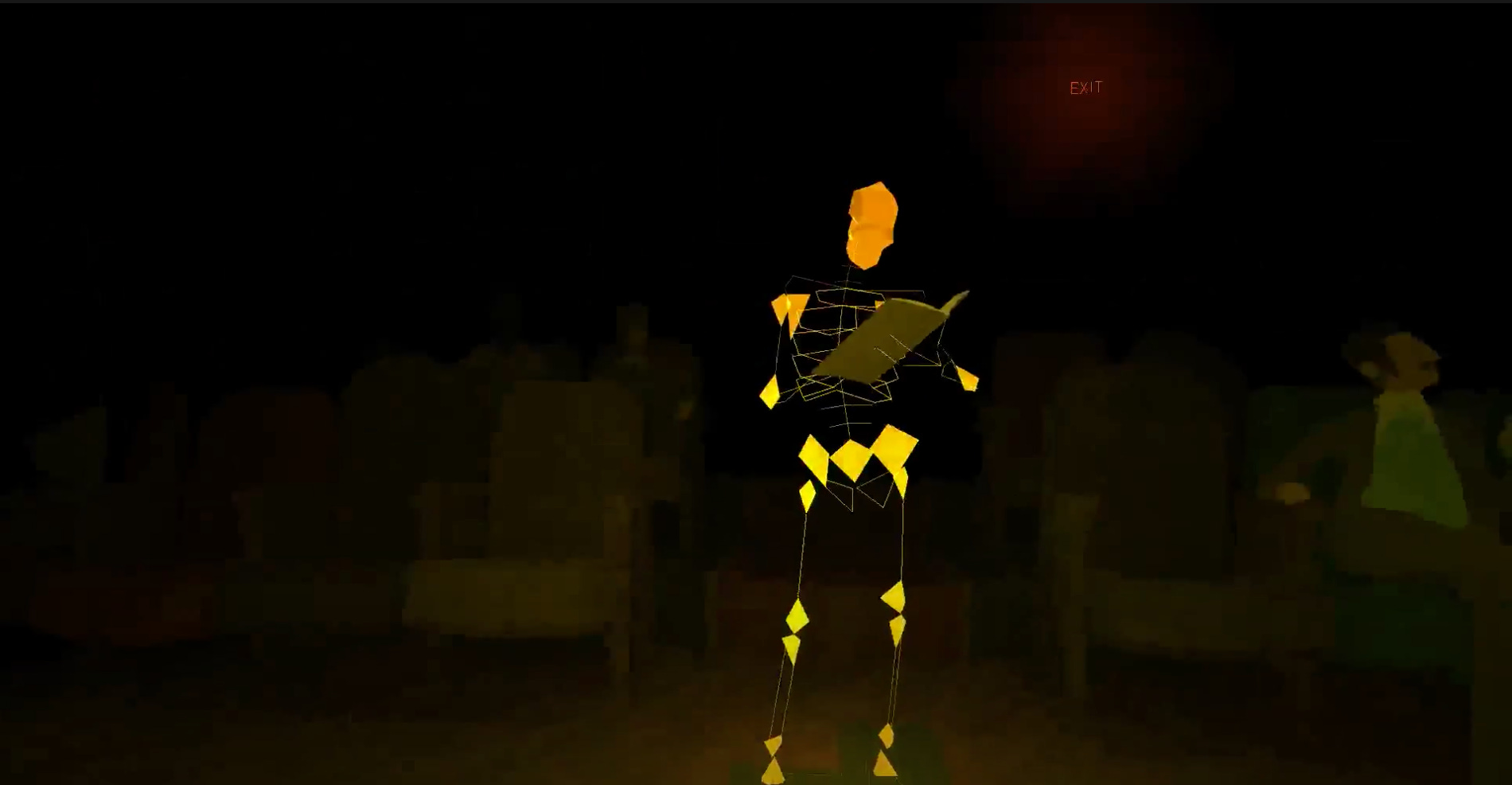
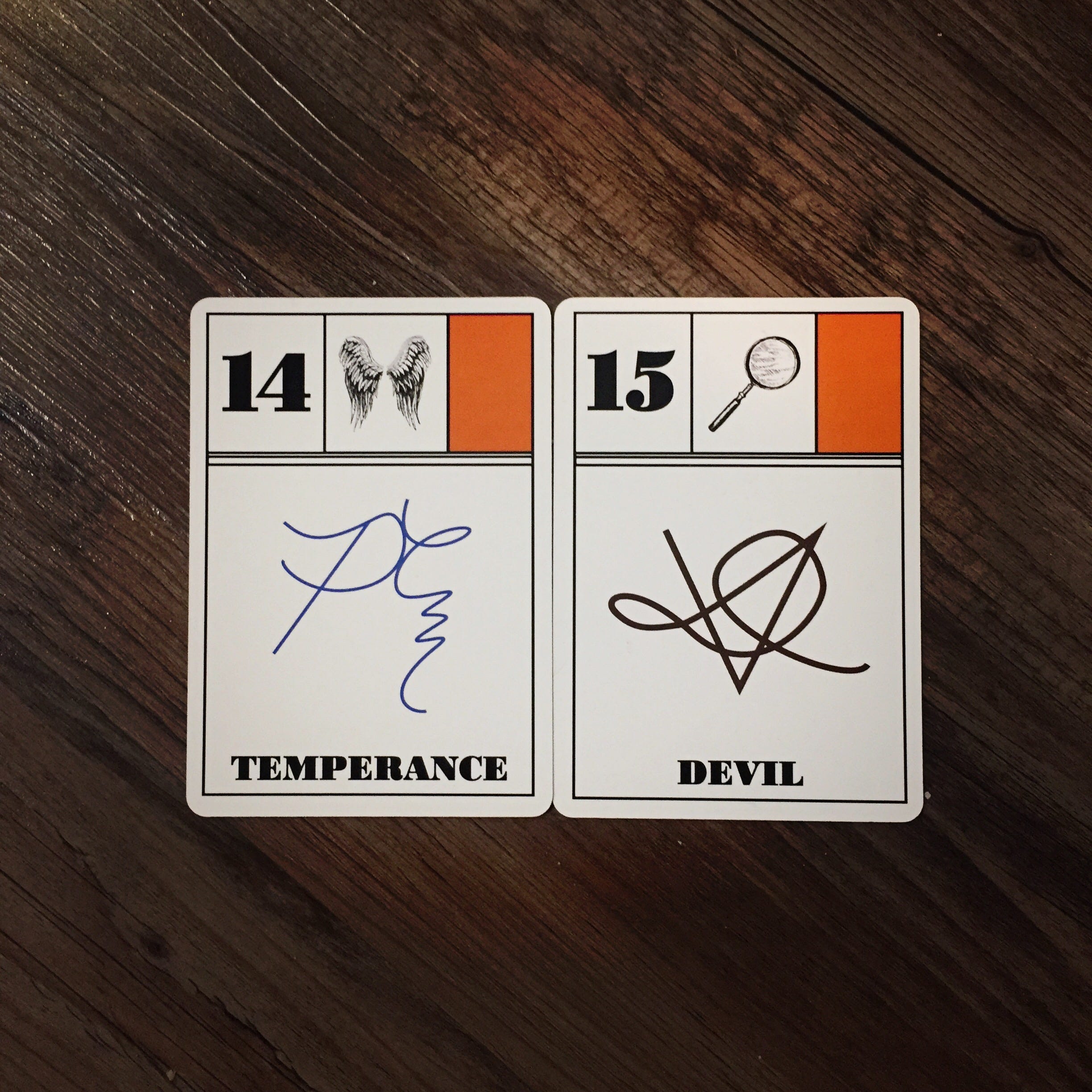
I was reminded of this when thinking about Temperance (XIV)’s relationship with Death (XIII) and distillation in an earlier missive. The progression that follows is just as interesting: that from Temperance (XIV) to the Devil (XV), in which the distilled substance is purified further, but not without significant and permanent sacrifice. The Vitriolic Tarot considers both cards to be part of the process of distillation (noted by the orange markings they share), and I find this to be a fascinating assessment:
Brian Cotnoir demonstrates in his Quintessence of Wine that the process of making brandy (eau de vie) has clear and explicit roots in alchemical tradition, as the distillation of wine has been seen as the simplest manner by which to obtain quintessence (that which animates material reality):
“The quintessence is the means by which creation is preserved and maintained, and through which things connect with and influence each other. ‘Just as the power of our souls brought to bear on our members through spirit, so the force of the World-soul is spread under the World-soul through all things through the quintessence.’
And not only does the quintessence maintain the macrocosm but the microcosm as well. According to these ideas if the quintessence could be absorbed into the body, its health, vitality and vigor could be maintained. The quintessence is in everything but in some things it is more pure and abundant and more easily ingested…”
As a result, numerous modern spirits have names with direct etymological roots in aqua vitae (water of life); even whiskey, coming from the translation to Irish as uisce beatha. Alcohol is often used in sacrament for such associations, and is a preferred offering to otherworldly beings in countless magical rituals.
When a spirit is aged, a certain amount of the distillate transpires through the wood of the barrel, then allegedly rises to the heavens and intoxicates the cherubim. This lost portion is known as the angel’s share.” However, much is also irretrievably lost to the wood of the barrel in the process: this, in turn, is the “devil’s cut.” Herein, the sacred offering cannot be made without its profane counterpoint, and the result is informed by both. Inevitably, the wood darkens the spirit, and gives it a more bodied flavor.
When we think of the Devil in Tarot, we think of various forms of bondage, whether they be to vice, sin, addiction, or debt. It encompasses all matters in which we have no choice but to deal with his domain in order to move forward. These things do not happen in a vacuum, of course; it is very rare that we have the good fortune to choose who our creditors are, and who in all pays the price of our bonds.
That being said, what we must leave behind defines us just as much as what we keep.
In Poland, there is a spirit known as starka. Tradition holds that families bury a barrel of the stuff when a daughter is born, and dig it up for celebration on her wedding day. Though it begins as a crude, clear potato distillate, after many years underground, it ages into a rich, golden spirit. Much of it is lost to angels and devils alike under such conditions, but the result is something potent to consume on that sacred day, regardless of whether or not it actually tastes good.
Over time, much of who we are is lost to the wood of the world. At the same time, that wood gilds our essence. The Devil may take his cut, but the most pure substance is given to the heavens, and the best is left for us.